The estate of s'Avall, acquired by the Mallorcan magnate Joan March in the 20th century, has its origins in 1285. With 2,440 hectares, the Colonia de Sant Jordi was born from it.
The estate of s'Avall, in the municipality of ses Salines, is much more than a farm: it is the heart of the empire of Joan March Ordinas, the Mallorcan businessman who became one of the richest men in the world. Acquired for 750,000 pesetas (150,000 duros) from Don Jorge Dezcallar y Gual, the 16th Marquis of Palmer, the estate had been in the same family since 1285, according to historical documentation. Today, 740 years later, it remains a symbol of power and rural transformation.
From noble estate to engine of agrarian change
Joan March did not buy s'Avall on a whim. The magnate from Santa Margalida had a clear plan: he parcelled and sold the properties of Pla and Raiguer at affordable prices to farmers who wanted to own their own land. Thus, without intending to, he promoted an agrarian reform that no government managed to achieve. In the Mallorcan countryside, March's figure generated sympathy and loyalty: he was seen as "one of us, not like the lords".
But s'Avall was different. March reserved it for himself, along with other coastal estates such as Mossa, Albarca, Ternelles, or s'Estorell. He needed them for his most lucrative business: smuggling tobacco, oil, and weapons during wartime. The northern coast, steep and inaccessible, was ideal for these activities. However, s'Avall, in the southeast, was the jewel: "the Mother House of the March family," as it was called.
A reform that created a palace in the Part Forana
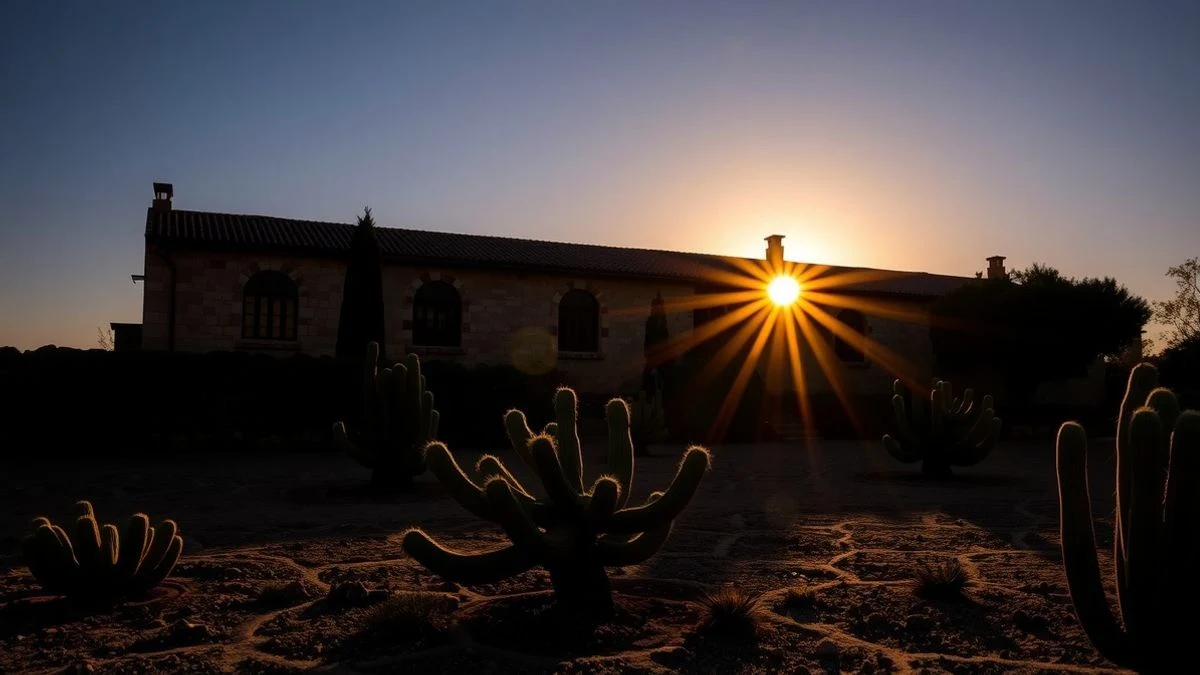
When March bought s'Avall, the old houses of the estate were almost in ruins. Between 1943 and 1944, during the post-war period, he commissioned architect Gabriel Alomar to carry out a major renovation. The result was a true palace of the Part Forana, with a cactus garden admired by visitors and an amphitheatre for dances and concerts. High-profile weddings, debutante balls for the magnate's granddaughters, and top-level business meetings were held there.
An urban legend in ses Salines claims that the road connecting the village to s'Avall was built for a visit from Franco to the wedding of one of March's granddaughters. However, there is no documentary evidence of that visit. In fact, March had a poor relationship with the dictator, who had ordered his arrest in 1942. What is known is that Carmen Polo, Franco's wife, was invited to the estate's parties.
From estate to tourism: the legacy of the Colonia de Sant Jordi
From the 2,440 hectares of s'Avall, the current Colonia de Sant Jordi was born, now a tourist enclave in southeast Mallorca. As early as 1889, a law on agricultural settlements from the Spanish Crown allowed for the parcelling and "establishment" of the area. The marquis who sold the estate to March practically saw no peseta, as he was a significant debtor to the magnate, to whom he had already sold other properties in Campos. These were times of ruin for the Mallorcan nobility, unable to cope with the 20th century.
Today, the estate of s'Avall remains a privileged enclave, although open for visits by appointment. The residents of ses Salines remember it as the place where March forged his legend, and where the history of Mallorca was written among cacti and smuggling. For those who wish to know it, the estate can be visited by contacting the Town Hall of ses Salines.
"Those hardworking farmers paid for many years the capital plus interest on the estates they had acquired," the chronicles of the time recall.
The story of s'Avall is, ultimately, the story of how one man transformed the Mallorcan countryside and created an empire from an estate that existed when the Kingdom of Mallorca was just beginning to take shape.

You may also like