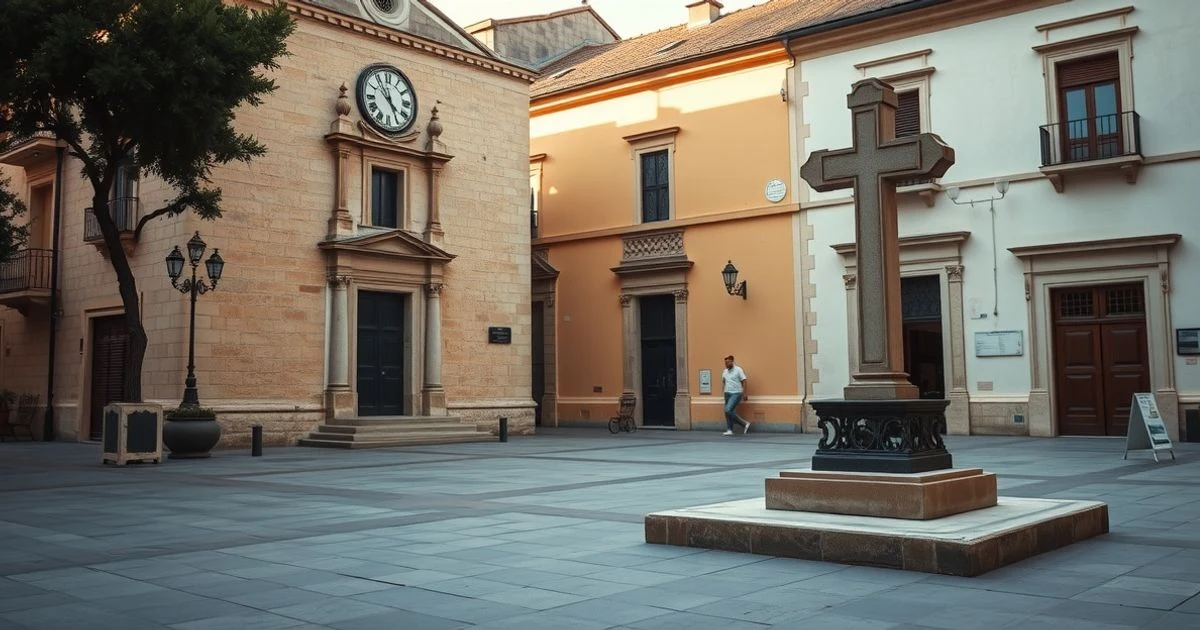
The Plaça de Santa Eulàlia was for centuries the heart of Palma, hosting the main market, a cemetery, and public executions. A cultural routes project rescues these forgotten stories.
The Plaça de Santa Eulàlia, now a haven of terraces and pedestrians in the heart of Palma, hides a much more gruesome past than what those who cross it daily might imagine. Iván Cerdá, a guide for the Mallorca Insólita project, has documented how this space was for centuries the true epicentre of the city: here the main market was held, the dead were buried, and occasionally, death sentences were carried out.
A Square with More Names than Any Other in Palma
Few squares in the Balearic capital have changed names as much as Santa Eulàlia. "It is the square with the most names in Palma," explains Cerdá. It was known as the plaça de les Cols, for the vegetables sold there; plaça des Pa, for the bread stalls; plaça dels Lledoners, for the trees in the area; and, since the 16th century, plaça Nova, after the expansion that removed the old cemetery located in front of the church.
Until the 18th century, before the market moved to the current Plaça Major, this was the true nerve centre of Palma. Vendors, buyers, and also justice converged here, using the space for public punishments.
Hidden Traces That Almost No One Sees
At first glance, the square seems like just another space in the historic centre, but those who look up discover details that most passers-by overlook. On the corner of Calle Morell, a stone cross can still be seen. "Some sources suggest it could commemorate the old cemetery that occupied this space," notes Cerdá. Other interpretations argue that it marked administrative boundaries of the city.
The sundial of the old Casa Vila also deserves a pause, where a female figure appears accompanied by a skeleton. Beneath both, a warning can be read that is as simple as it is unsettling: "Every hour wounds; the last one kills". Very close by, on the façade of Bar Tony, three female sculptures represent dawn, noon, and dusk. "They are Aurora, Midday, and Eve, but they also symbolise the different stages of life," details the guide.
When the Square Was a Stage for Punishments
The history of Santa Eulàlia also has a dark side. For centuries, the square witnessed public executions that aimed for an exemplary effect. The condemned were executed before the gaze of citizens who came to the market. "It was a space of life and death, of commerce and punishment," summarises Cerdá. This duality, now forgotten, is part of the city's intangible heritage.
For the local residents of Palma, knowing these details transforms their perception of the place. The next time they sit on a terrace or stroll among its cobblestones, they will know that beneath their feet lie centuries of history: from the vegetables that nourished the city to the last words of the condemned. Mallorca Insólita organises regular routes that explore these and other corners with hidden stories. A way to rediscover Palma, with a touch of irony about what the daily hustle and bustle conceals.

You may also like


