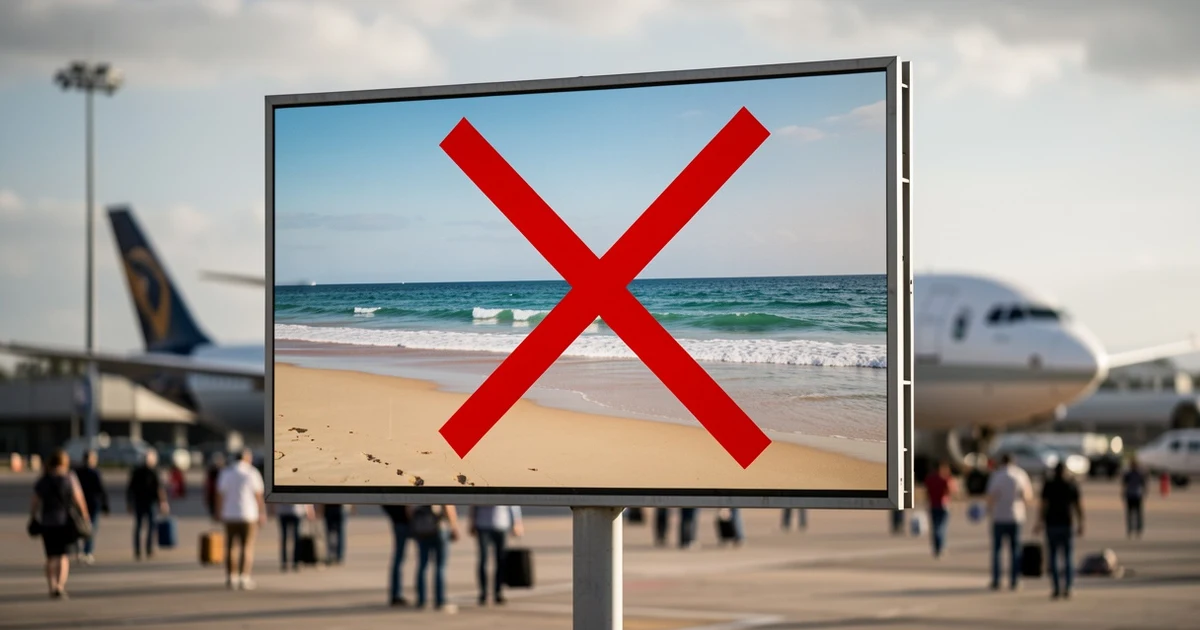
The Town Hall of Capdepera, governed by Més and PP, announces measures to curb excessive tourism in Cala Rajada and Cala Agulla following a controversial campaign by a travel agency.
The Town Hall of Capdepera has decided to move from anger to action. After the withdrawal of an advertising campaign promoting excessive tourism in Cala Rajada, the local council now aims to act at the source. The flagship measure: to require that any visitor wishing to enjoy the beaches of the municipality does so with a 'ticket of respect for the regulations and the environment'.
The controversy erupted when a travel agency placed a poster at Son Sant Joan airport with the slogan 'What happens in Mallorca stays in Mallorca', associated with study trips and unrestrained tourism. The campaign, which was also disseminated on social media, generated immediate backlash in the municipality, which saw Cala Rajada caricatured as an all-you-can-drink excess.
A long-standing problem
This is not the first time Capdepera has suffered from such promotions. According to municipal sources, in recent months other similar attempts have been detected, although less flashy. 'This is not a one-off spike,' say the Town Hall, which believes that the image of Cala Rajada as a destination for excesses has harmed the municipality and the coexistence between residents and tourists.
The council, in an unusual pact between Més and PP that is proving effective at the local level, has decided not to remain in complaint mode. 'Silence would have meant contributing to the degradation of the municipality,' the same sources point out. Therefore, they have raised the issue to the Tourism Model Transformation Table, a supramunicipal body seeking to rethink tourism in Mallorca.
An opportunity for the PP
Capdepera's reaction has a double meaning. On one hand, the municipality has been placed in the crosshairs of tourism mismanagement. On the other, the local pact between Més and PP allows for a vigorous response. Més has led the protest, but the PP now has a golden opportunity to convey to the Consell de Mallorca, the body responsible for tourism promotion, the need for responsible tourism campaigns.
According to sources from the Town Hall, the image of responsible holidays cannot be limited to Llevant or the Ponent area, which is now adorned with drones. 'In these times of over-occupancy, it must be safeguarded across the entire island,' they insist. The proposal is for the Consell to promote campaigns that leave no room for excess, with a clear message: respect for the environment and regulations is mandatory, not optional.
What changes for the visitor?
For now, the Town Hall has not specified the penalties or control mechanisms, but indicates that surveillance on the beaches will be intensified and codes of conduct among tourists will be promoted. The residents of Cala Rajada and Cala Agulla hope that the measures will take effect before next summer, when tourist pressure skyrockets.
The announcement of the airport poster, claiming that what happens in Mallorca stays there, was false. 'There are things that shouldn't even enter the island,' the council states. The next meeting of the Tourism Model Transformation Table will be key to defining the lines of action.

You may also like


