The Bizkaia Court has sentenced nine individuals for defrauding the steel company Nervacero by misclassifying cheap scrap as expensive. Sentences range from ten months to one year in prison, and they must compensate the company with over €404,000.
The Sixth Section of the Bizkaia Court has issued a ruling against nine individuals accused of defrauding the company Nervacero, based in Biscay, through a fraud in the classification and sale of scrap. Six of them have been convicted as authors or necessary collaborators of an aggravated fraud offence, receiving sentences of one year in prison and a fine of €2,700 each. The other three, considered authors of a continued fraud offence, will serve ten months and fifteen days in prison. Additionally, all of them will have to jointly and severally compensate the company with €404,812.
The Scheme: Cheap Scrap Sold as Expensive
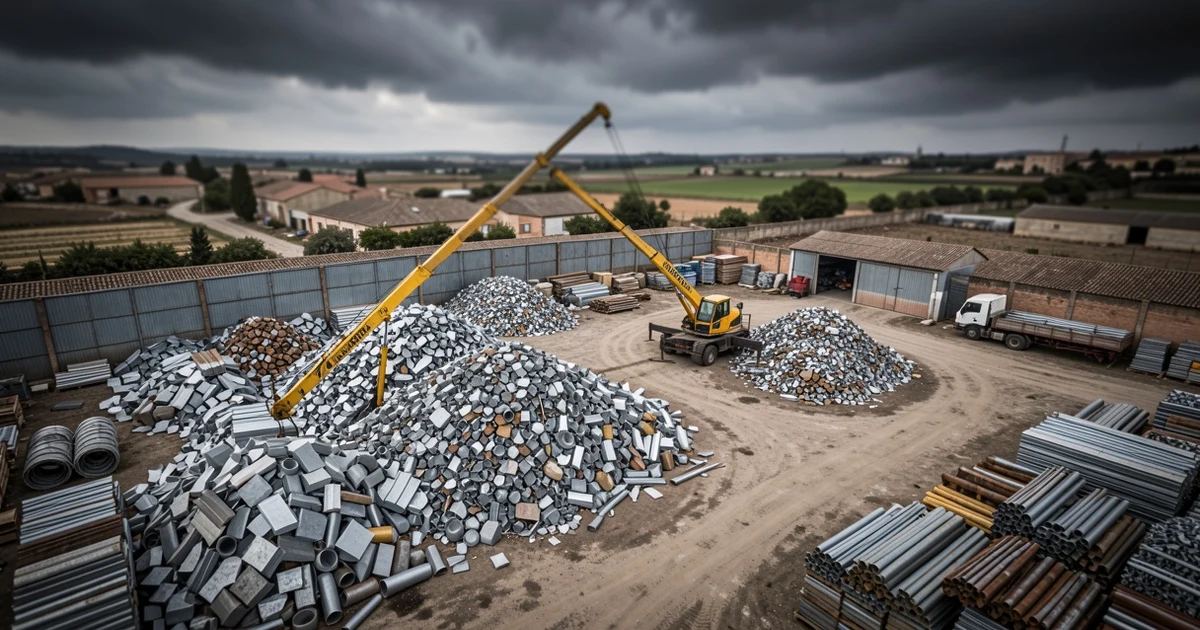
According to the ruling, the convicted individuals — scrap classifiers from Nervacero, transporters, and employees of supplier companies — exploited their positions to gain illicit economic benefits. The court has established that, with the intent to obtain a financial advantage, they declared and sold low-quality scrap (first, second, and shavings) as if it were new, structural, or fragmented scrap, which commands a higher price.
The scam lasted for years, although only operations carried out between November 28, 2011, and May 23, 2012, could be substantiated. During that period, more than 450 deliveries of cheap scrap were made, with the classification deliberately altered. The profits obtained were shared among those involved, as stated in the ruling.
Acquittals and Unjust Delays
The court has acquitted another eight individuals and seven companies that were also charged in the proceedings. The ruling indicates that the convicted acted in their own name and for their own benefit, without evidence that they did so within the framework of decisions made by the companies for which they worked. There was also no significant defect in the company's control mechanisms that would have facilitated the fraud, leading to the acquittal of the companies.
The Bizkaia Court acknowledges the complexity of the investigation, which has lasted more than 14 years from the initiation of the proceedings to the trial held in February 2026. Therefore, it has considered the mitigating factor of unjust delays as highly qualified, which has reduced the initially requested sentences.
For the residents of the Biscay region where Nervacero operates, this ruling marks the closure of a case that has affected trust in the local industrial sector. The company, which employs hundreds of workers in the area, has had its economic harm recognised, although the judicial process has taken longer than desirable. Now, the convicted individuals must face the imposed compensations and penalties, in a case that serves as a warning about fraudulent practices in the management of metal waste.

You may also like