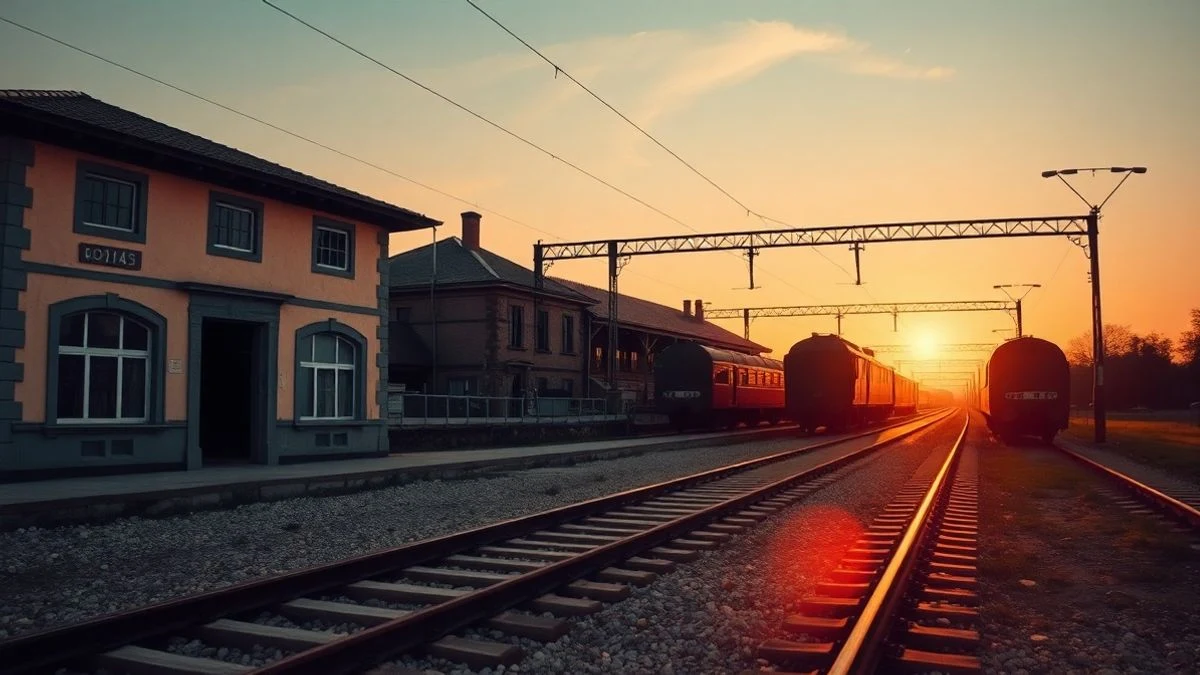
Serveis Ferroviaris de Mallorca (SFM) has presented the book '1875-2025. 150 Years of Railways in Mallorca', which covers everything from the first Palma-Inca line to the metro extension to ParcBit.
The dream of Eusebi Estada began to come true in 1875, when the first train line between Palma and Inca was inaugurated. Now, 150 years later, a book compiles the history of a key infrastructure for the development of Mallorca. The work, published by Serveis Ferroviaris de Mallorca (SFM), was presented this Monday at the Términus building in Palma, the former station and current institutional headquarters of the public company.
From Steam to Electrification: The Legacy of Eusebi Estada
The author of the book, Carlos Olmo, is an active train driver and a passionate enthusiast of Mallorcan railway history. He has dedicated years to documenting each stage, from Estada's early projects to the current network. "The railway transformed an agricultural society with very limited mobility," Olmo explained during the presentation. The publication details how the initial promoters renounced state subsidies to maintain local control.
The first station in Palma was built in the Porta Pintada square in 1875. The train reached sa Pobla in 1878 and Manacor in 1879. Those steam tracks connected towns and markets, laying the foundations for modern Mallorca. The book dedicates a special chapter to Estada, who published his studies on the economic viability of the railway between Palma and Inca.
The Autonomous Recovery: From Abandonment to Modernisation
The work pays special attention to the period that began in 1994, when the Govern took over railway responsibilities. This phase began after years of decline for the train and has been marked by the recovery of services and the modernisation of infrastructures. Notable actions include the reopening of lines, the renovation of platforms, and the renewal of tracks.
One of the most emblematic projects has been the burial of the tracks in Palma and the construction of the Intermodal station, which features ten tracks and five railway platforms, as well as thirty bays for intercity buses. This is complemented by the metro to the Universitat de les Illes Balears and its extension to ParcBit, operational since July 2025.
The book also addresses future plans. Among the projects in progress are the Palma-Llucmajor line, with stops at Son Llàtzer, the airport, and El Arenal; the extension of the train from sa Pobla to the Port of Alcúdia; and the metro extension from the UIB to Son Espases.
A Thousand Copies and a Historic Setting
SFM has published a thousand copies: 600 in Spanish and 400 in Catalan. The presentation was held in the Términus building, a historic space linked to the train that has recently been restored as an institutional headquarters. The manager of SFM, José Ramón Orta, highlighted the importance of preserving railway memory: "This book is a tribute to all those who made the train possible in Mallorca and to those who work every day to keep it alive."
For the Mallorcan reader, the work offers a unique opportunity to learn how the railway has shaped the geography and economy of the island. From the first steam carriages to the modern electric trains, the history of the train is also the history of Mallorca. The book can be purchased at SFM offices and in major bookstores on the island.

You may also like


