The Turkish government has detained 225 people in the past week, of whom 178 have been placed in pre-trial detention, and has denied accreditations to independent media for the NATO summit taking place on Tuesday and Wednesday in Ankara.
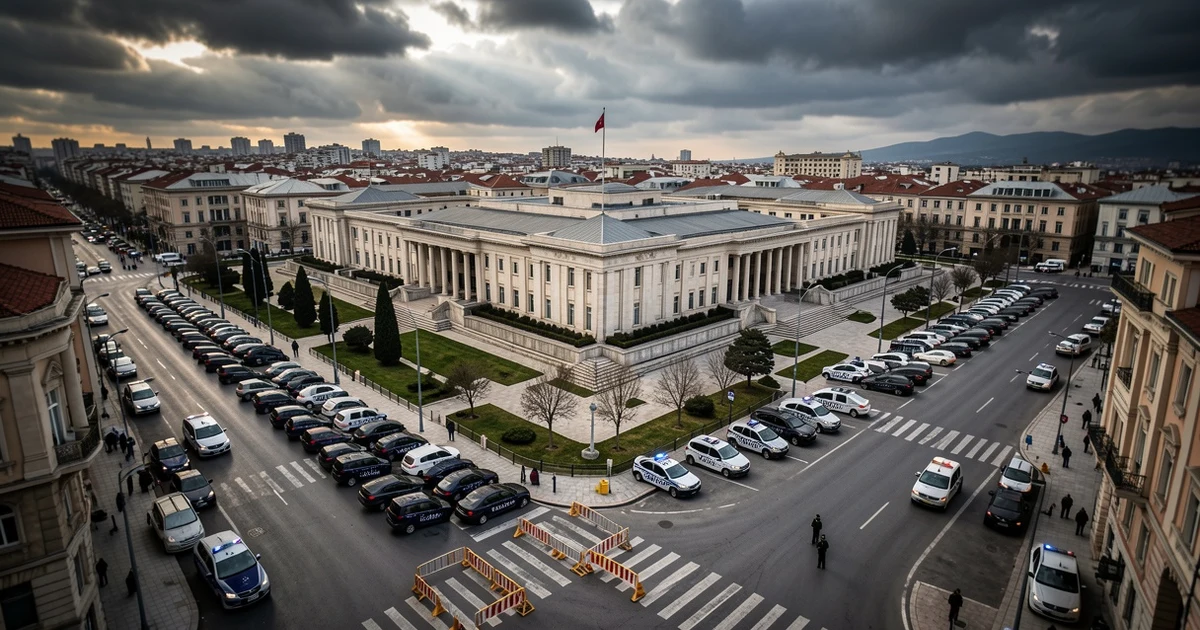
The Turkish government has deployed an unprecedented security operation in Ankara for the NATO summit, which will bring together the heads of state and government of the 32 member countries next Tuesday and Wednesday. As part of the measures, the Turkish police have detained 225 people in the last week, of whom 178 have been placed in pre-trial detention on charges of alleged links to far-left terrorist organizations.
Among those detained are a sociology professor, lawyers, journalists, trade unionists, and members of an environmental association. The opposition leader, Özgür Özel, of the CHP party, has described the arrests as a "shame" and has denounced them as "preventive detentions" to avoid protests during the visit of international leaders.
Ban on Protests and Mobility Restrictions
Since June 28, any type of demonstration, march, or protest has been banned in the Turkish capital, as well as the display of banners or the distribution of leaflets. This measure will remain in effect until July 10, two days after the summit concludes.
Significant traffic restrictions are expected in an area of about 20 square kilometers around the presidential complex, the venue for the meeting. Although an official map has not been released, the authorities have granted administrative leave to a large part of the civil service between July 6 and 12 and have postponed exams, graduations, festivals, concerts, and other public events.
A total of 56,000 police will participate in the security operation, with specialized units to assist international delegations. Among the attendees will be the President of the United States, Donald Trump.
Ban on Critical Press
Another controversial aspect has been the rejection of accreditations to journalists from numerous independent media outlets to cover the summit. Press freedom advocacy organizations have denounced that this measure seeks to silence critical voices at a time of heightened international attention.
For the residents of Ankara, the summit means a week of restrictions that disrupt daily life. Schools and universities have suspended classes, and many businesses and offices will remain closed. Authorities recommend avoiding unnecessary travel and following the instructions of traffic officers.
The NATO summit will address, among other issues, the war in Ukraine, the expansion of the Alliance, and tensions in the Middle East. Leaders are expected to approve new deterrence measures and reinforce their commitment to collective security.
You may also like